
The escalating US-Iran Hormuz conflict has completely isolated America. Discover why Trump’s NATO U-turn, rising gas prices, and naval disasters spell global chaos.

The US-Iran Hormuz conflict has officially entered a bizarre and highly dangerous new phase. Just days after the United States administration was practically begging its global allies for naval assistance to secure the world’s most critical oil chokepoint, President Donald Trump executed a whiplash-inducing diplomatic U-turn. As the smoke clears over the Persian Gulf and the economic fallout begins to crush Western consumers, the narrative out of Washington has shifted from a desperate plea for coalition support to a belligerent declaration of American isolationism.
For those of us closely tracking global geopolitical shifts and energy markets, the current state of the US-Iran Hormuz conflict represents a catastrophic failure of traditional diplomacy. NATO is fracturing, the American domestic political landscape is erupting in revolt, and the strategic reality on the water is proving disastrous for the Pentagon. Here are the five shocking truths behind the ongoing escalation and why the world is bracing for an economic shockwave.
1. The Bizarre NATO U-Turn in the US-Iran Hormuz Conflict

Less than a week ago, the Trump administration was openly calling upon nations like the UK, France, Japan, and South Korea to deploy their warships to the Middle East. The goal was to break the Iranian blockade that has paralysed the Strait of Hormuz. However, the international community unequivocally rejected the invitation. Germany, Canada, Norway, Greece, and France all collectively stated they would not participate in a war they view as unprovoked.
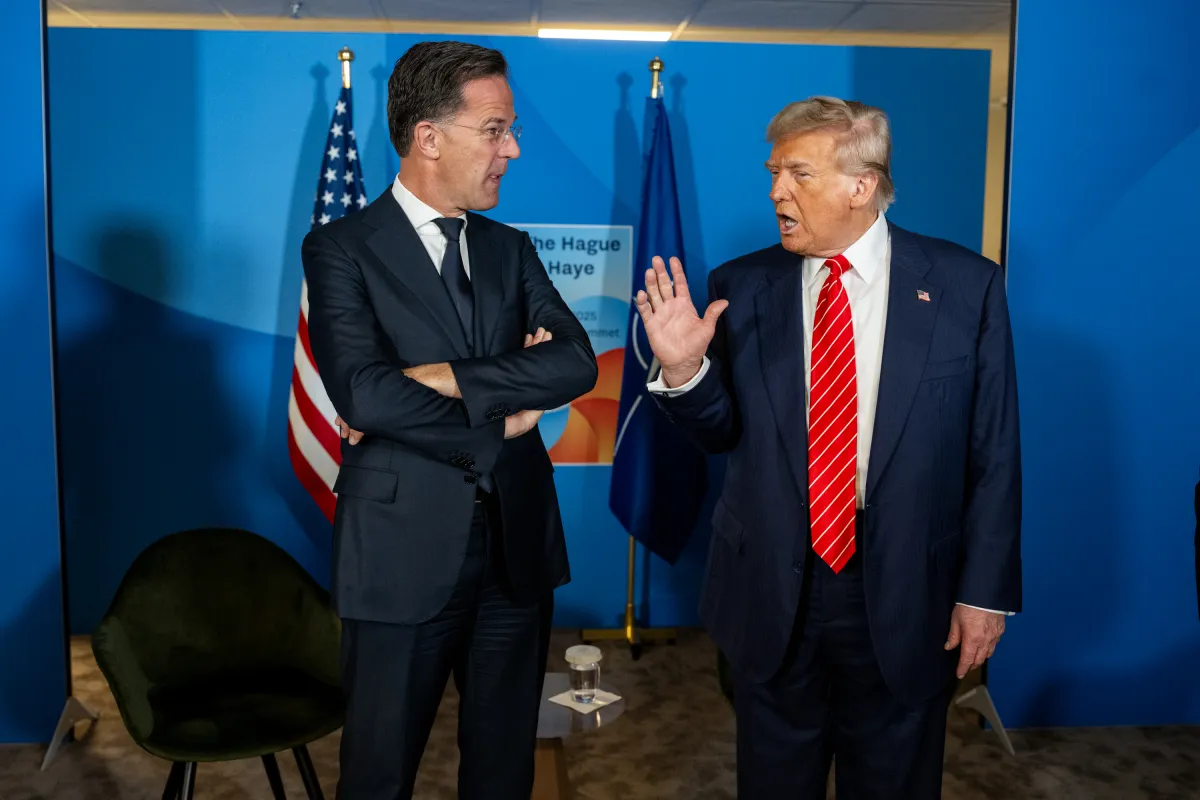
Faced with this humiliating rejection, Trump took to his Truth Social platform to rewrite history. In a stunning reversal, he declared that the United States never wanted NATO’s help in the US-Iran Hormuz conflict, dismissing the alliance as a “one-way street” that drains American taxpayer dollars. He went a step further, aggressively belittling the leaders of his closest allies. He mocked French President Emmanuel Macron as a lame duck and publicly insulted the UK Prime Minister, effectively torching decades of transatlantic security cooperation. By declaring the US military the “mightiest of all” that needs no assistance, Trump is attempting to mask the reality that America is fighting this war entirely alone.
2. The USS Gerald R. Ford and the “Laundry Fire” Cover-Up

The political rhetoric claiming total American supremacy in the US-Iran Hormuz conflict directly contradicts the grim reality playing out on the battlefield. The Pentagon has repeatedly claimed that Iran’s military capabilities, including its navy and radar systems, have been “100% neutralized.” If that is the case, naval analysts are asking a very pointed question: Why is America’s most advanced supercarrier retreating?
The USS Gerald R. Ford, the crown jewel of the United States Navy, recently suffered an unexplained onboard emergency that lasted for over 30 hours. Official channels have downplayed the incident as a mere “laundry fire.” However, independent defence monitors and European defence publications like The Guardian have confirmed that the massive aircraft carrier has been pulled out of the combat zone and sent to a NATO base in Crete, Greece, for extensive repairs. In the context of the US-Iran Hormuz conflict, losing the primary staging ground for airstrikes is a staggering tactical defeat, heavily suggesting that Iranian asymmetric warfare—using drone swarms or sea mines—has successfully penetrated American defences.
3. Domestic Backlash and the MAGA Revolt

The political fallout of the US-Iran Hormuz conflict is severely threatening Donald Trump’s grip on his own domestic base as the crucial November midterm elections approach. This is no longer just a foreign policy issue; it is a domestic crisis.
The backlash within the administration became undeniable when Joe Kent, a top US counter-terrorism official, abruptly resigned in protest. Kent publicly stated that the US-Iran Hormuz conflict is not an American war, accusing the administration of acting as a pawn for Israeli regional interests.
This sentiment is echoing loudly across Trump’s core “Make America Great Again” (MAGA) base. Highly influential conservative commentators like Tucker Carlson are openly questioning the necessity of the war, pointing out that diplomatic avenues were available to prevent the conflict entirely. Republican lawmakers are panicking, fearing that dragging the country into a protracted, unwinnable Middle Eastern war will result in a bloodbath at the ballot box, potentially paving the way for impeachment proceedings if they lose control of Congress.
4. The Economic Toll: Gas Prices and Iranian Veto Power

The most immediate global impact of the US-Iran Hormuz conflict is being felt at the gas pump. In the United States, the national average for gasoline has surged past $3.79 per gallon, putting immense pressure on the working class and threatening a resurgence of runaway inflation.
This economic pain is directly tied to Iran’s effective veto power over the Strait of Hormuz. Despite the relentless American bombardment, maritime tracking data shows that commercial vessels are only successfully navigating the strait by hugging the Iranian coastline—essentially operating under the explicit permission and protection of the Iranian Revolutionary Guard Corps (IRGC).
Furthermore, Tehran has escalated its retaliatory strikes, heavily targeting the energy infrastructure of US allies. Recent overnight drone and missile barrages successfully bypassed defence systems to strike a massive natural gas field in the United Arab Emirates. By hitting upstream oil and gas facilities, Iran is proving that it can systematically dismantle the global energy supply chain if the US-Iran Hormuz conflict continues. (Internal Link Placeholder -> [Read our exclusive breakdown of the transnational terror pipelines exploiting regional chaos here])
5. India’s Harsh Condemnation of Western Warmongering
As the US-Iran Hormuz conflict destabilises the global economy, the international community outside of NATO is losing its patience. The Government of India, representing the voice of the Global South and one of the world’s largest energy importers, has issued a brutally harsh condemnation of the ongoing escalation.
New Delhi, watching its own inflation metrics rise due to the reckless disruption of Middle Eastern shipping lanes, refused to mince words. The official Indian response stated: “India completely condemns this kind of behaviour from global superpowers who prioritise transactional politics over global stability. Dragging the entire world into an economic crisis to serve narrow, unilateral military objectives is utterly unacceptable.”
The Indian government’s statement forcefully dismantled the justification for the war, highlighting that diplomacy was cast aside in favour of aggression. “The sovereign nations of the Global South will not quietly absorb the economic shockwaves of a war we did not start. The deliberate destabilisation of the Strait of Hormuz is a direct threat to the energy security and economic survival of developing nations. We demand an immediate cessation of these reckless military adventures.” By taking this aggressive diplomatic stance, India has clearly signalled that it views the American escalation not as a security measure, but as a dangerous liability to global peace.
The Bottom Line
The US-Iran Hormuz conflict has exposed the severe limitations of American unipolar power. Donald Trump’s isolationist rhetoric cannot hide the fact that NATO has abandoned the campaign, domestic support is crumbling, and the U.S. Navy is taking unexpected damage.
As the war drags into its next agonising phase, the economic reality is setting in. The conflict is no longer just about who controls the airspace over Tehran; it is about who controls the price of everyday goods across the globe. Unless a diplomatic off-ramp is found quickly, the fallout from the US-Iran Hormuz conflict will rewrite the political and economic order for decades to come.
Do follow or page: The Morning Draft